


A hand-painted pareo carries the time, precision, and sensibility of the artist who created it. The design is painted directly onto the fabric, stroke after stroke, with colors applied in layers and left to dry between each pass. That process gives the pareo its depth, movement, and subtle irregularities - details that machine-made textiles simply do not have. From bold hibiscus flowers to stylized coastal scenes and geometric compositions, each piece reflects a distinctly Polynesian artistic gesture. Even when two motifs follow the same theme, no two pareos are ever strictly identical.
Showing 1–12 of 39 results
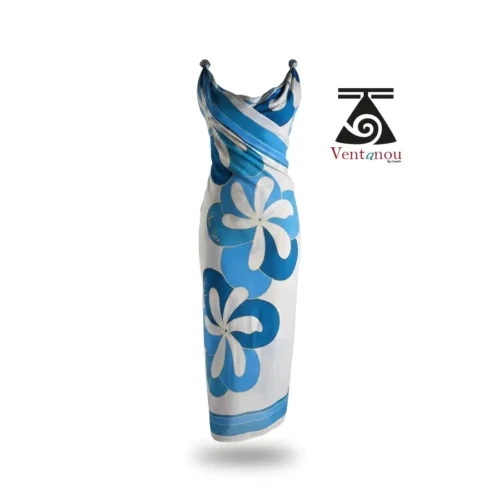
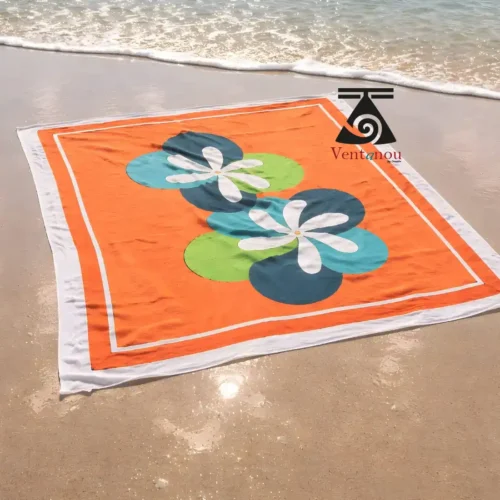
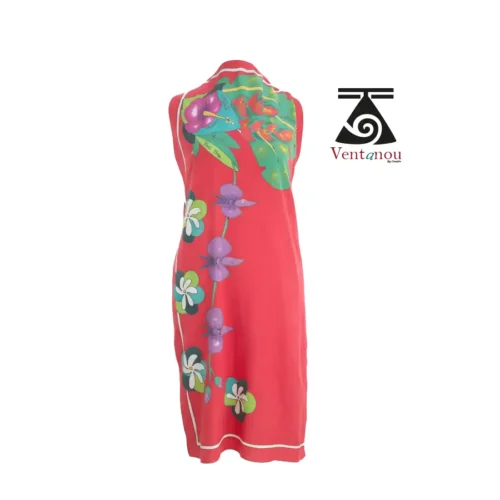
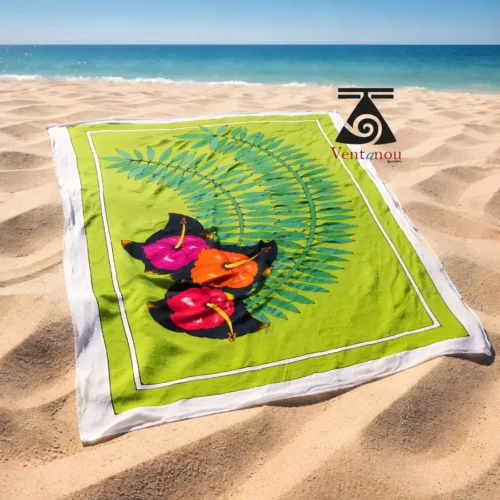


A hand-painted pareo is more than a lightweight wrap for warm weather. It is a painted textile, shaped by technique and patience. The artist must control pigment, water, and drying time carefully to preserve clarity in the lines and softness in the transitions. That handmade approach creates a finish with real presence: the surface feels alive, the colors shift gently, and the motif keeps the character of the hand behind it. This is what gives the piece its rarity and its value.
Floral motifs remain among the most loved. A large hibiscus can take over the entire composition, while repeated tiare flowers or frangipani create a lighter rhythm along the edges. Some artists prefer geometric structures inspired by island patterns, waves, or tribal-influenced lines, while others paint landscapes with lagoon tones, coconut palms, and sunset skies. Many compositions blend these worlds together, combining flowers, graphic forms, and scenery in a single design. That variety makes each pareo feel personal rather than generic.
One of the strengths of a pareo is its versatility. It can be worn as a long skirt, a short wrap, a halter dress, a shoulder cover, or a light layer after the beach. The same piece moves easily from daytime to evening, from casual wear to something more refined. Choosing a painted pareo gives that everyday versatility a stronger visual identity. For a wardrobe that stays in the same island spirit, it can also be paired naturally with women’s Polynesian dresses.
The appeal of a painted textile lies in what it does not try to hide. Slight variations in saturation, softened edges, and brush-led transitions are not defects - they are the proof of handmade work. Industrial printing aims for repetition and perfect uniformity. A painted Polynesian pareo does the opposite. It keeps the rhythm of the gesture, the nuance of the pigment, and the small differences that make the fabric feel singular. This attention to color, texture, and gesture is part of a wider world of Polynesian beauty.
A hand-painted pareo deserves simple but careful maintenance. Wash it on a delicate cycle in cold water, ideally no higher than 30°C, to protect the pigments. Let it dry in the shade rather than under strong direct sunlight, which can weaken color over time. If ironing is needed, turn the fabric inside out and use gentle heat. With these habits, the pareo keeps its brilliance and develops the kind of soft patina that belongs to well-loved textiles rather than worn-out ones.
A painted pareo is not the kind of item you buy for one season and forget the next. It is made to remain in a wardrobe, to be worn again, remembered, and sometimes even passed on. Some people reserve it for holidays or special moments, while others use it often and enjoy the way the fabric evolves over time. That emotional durability matters. It gives the pareo a place beyond fashion, somewhere between clothing, memory, and artistic object.
A painted pareo is not the kind of item you buy for one season and forget the next. It is made to remain in a wardrobe, to be worn again, remembered, and sometimes even passed on. Some people reserve it for holidays or special moments, while others use it often and enjoy the way the fabric evolves over time. That emotional durability matters. It gives the pareo a place beyond fashion, somewhere between clothing, memory, and artistic object. Each piece carries its own rhythm, its own motif, and the unmistakable presence of the artist’s hand.
