


Polynesian animal sculptures bring island life into a space without needing big size or flashy color. Sea and land forms show up again and again: turtle, manta ray, shark, lizard, whale. The carving is rarely “photorealistic”. It goes for what makes the animal instantly recognizable, a profile, a curve, a posture, and leaves the rest out. If you want decor with meaning, or a gift that feels connected to the ocean, animal pieces are often the most natural starting point.
Showing 1–12 of 17 results


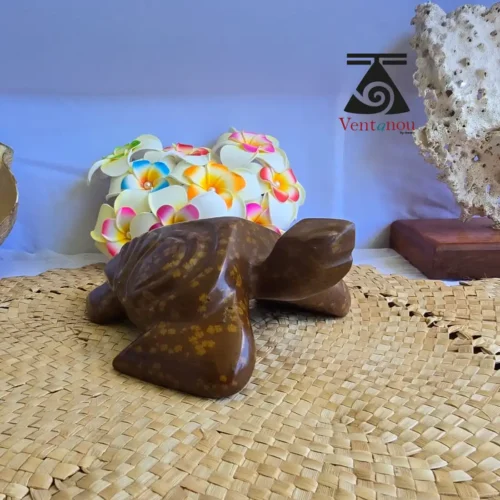
In Polynesian art, animal forms are never random. The turtle is linked to long journeys and steady guidance. The manta ray suggests freedom and fluid movement, almost effortless. The shark carries a stronger energy - respect, power, and a presence that doesn’t apologize. The lizard (mo’o) connects land and spirit in island stories, and whale shapes often feel calmer, more grounded, more “ocean-wide”. A sculpture can look simple, but still carry a clear intention. The key is readability: you want a piece that keeps its meaning even from across the room. When the silhouette is right, you don’t have to explain it.
Wood is the classic choice for Polynesian animal sculptures, and different local essences change the feel of the piece. Ironwood (‘aito) tends to be darker and heavier. Miro brings warmer tones and visible grain. Volcanic stone works beautifully for stronger shapes and more architectural placement. Fossil coral is rarer and gives a surface with organic texture that catches the eye through detail rather than shine. Most pieces are hand-carved, and the material leads the final result. Grain, knots, small irregularities, they change the curve, the depth, the finish. Two turtles can share the same idea and still look different in the hand.
Start with one question: which animal feels right for the person or the room. Turtle for a calm, steady symbol. Manta ray for movement and lightness. Shark for a bolder presence. Then look at size. Smaller pieces sit easily on a shelf. Mid-size sculptures structure a console or sideboard. Large carvings become a focal point and need space around them to look their best. If you’re choosing between materials, think “warm” vs “architectural”: wood brings warmth, stone brings weight and calm structure. For a stronger, figure-led focal style, tiki pieces create a different kind of presence.
Wood carvings stay beautiful with simple care: regular dusting with a soft cloth, and occasional oiling if the surface looks dry. Direct sun for long hours can fade and dry the wood, so a bit of shade helps. Stone is easy: a gentle wipe, mild soap if needed. Coral pieces are stable as long as they’re kept away from constant humidity. If you want a quick way to decide, picture the exact spot at home. When the silhouette feels obvious there, it’s usually the right match. To explore more materials and finishes, coral pieces are a good contrast to wood and stone.
