Monoï de Tahiti has fascinated people far beyond the shores of French Polynesia. Made by macerating fresh tiaré flowers in refined coconut oil, this fragrant golden oil has been part of Polynesian body care traditions for generations. Yet there is an important difference between products simply marketed as “monoi” and authentic Monoï de Tahiti, which has been legally protected since 1992. This guide explains its cultural origins, regulated production process, and the reliable signs to look for when choosing genuine Tahitian monoi oil.
Table of Contents
- What is Monoï de Tahiti?
- A scented oil and a sacred oil
- From traditional knowledge to official protection
- Traditional monoi vs. protected Monoï de Tahiti
- The legal Appellation of Origin
- How Monoï de Tahiti is made
- How to identify authentic Monoï de Tahiti
- Monoï de Tahiti FAQ
- Explore monoi products
- Official sources
What is Monoï de Tahiti?
Monoï de Tahiti is made by macerating fresh tiaré flowers in refined copra oil. Copra is the dried flesh of mature coconuts harvested in French Polynesia. The composition may sound simple: coconut-derived oil and fresh tiaré flowers. Their carefully regulated combination creates a distinctive scented oil protected by an official Appellation of Origin. It should not be confused with a basic scented oil or a fragrance blend designed merely to evoke the scent of monoi.
A scented oil and a sacred oil
The Tahitian term mono’i refers to a scented oil and is also presented in official Monoï de Tahiti materials as a “sacred oil.” This second expression reflects the special place the preparation holds within Polynesian culture. Its ritual significance is not a modern marketing invention. Monoi has long been part of everyday and ritual life in Polynesia, well before it became a cosmetic product sold around the world.
From traditional knowledge to official protection
Two related traditions coexist in French Polynesia and are often confused. The first is traditional monoi, prepared according to family recipes that may vary from one household or island group to another. The second is Monoï de Tahiti protected by an Appellation of Origin, with raw materials, production methods, and labeling requirements governed by the French decree of April 1, 1992.
The creation of the Appellation of Origin did not replace family-made monoi. It established a shared and verifiable production standard for products commercially sold under the name “Monoï de Tahiti.”
Traditional monoi vs. protected Monoï de Tahiti
This distinction is often unclear to shoppers. The word “monoi” on its own does not prove that a product is covered by the official Appellation of Origin. To identify protected Monoï de Tahiti, look for the full name “Monoï de Tahiti,” followed by the exact French words “appellation d’origine”.
References to the protected designation, including partial references to its Polynesian geographic origin, are regulated for cosmetic products. Products using those references must comply with the composition and labeling conditions established by the decree.
The legal Appellation of Origin
Monoï de Tahiti was the first cosmetic product in the world to receive an Appellation of Origin. This legal protection was established on April 1, 1992, through French Decree No. 92-340. The decree defines Monoï de Tahiti as a product made in French Polynesia by macerating tiaré flowers in refined copra oil. The oil must come from mature coconuts harvested within the designated Polynesian geographic area and on coral-derived soils.
The decree identifies the two principal raw materials. The flowers must come from the Polynesian tiaré species Gardenia taitensis. The coconuts must come from Cocos nucifera palms harvested within the geographic area defined by the regulation. The name “Monoï de Tahiti” may also be accompanied by certain geographic indications, including “Marquesas,” “Moorea,” or “Bora Bora,” when the raw materials were harvested within the corresponding areas defined by the decree.
To support traceability and compliance, manufacturers and bottlers must maintain records covering refined oil, tiaré flowers, any other plant species used, and the quantities of monoi produced. For a boutique based in Moorea and committed to Polynesian products, this regulation is more than an administrative requirement. It provides a meaningful guarantee for both responsible manufacturers and the people purchasing their products.
How Monoï de Tahiti is made
The 1992 decree regulates the production process, from the stage at which the flowers are harvested to the final physical and chemical characteristics of the oil.
Harvesting the tiaré flowers
Tiaré flowers are harvested when the flower bud is beginning to open, but before the bloom has fully opened. The regulations require the flowers to be used no later than the day after harvesting, leaving little room for delays during production.
Macerating the flowers in copra oil
The flowers are placed in refined coconut oil made from copra, the dried flesh of the coconut. The official production standard requires at least 10 tiaré flowers per liter of oil, with a minimum maceration period of 10 days.
After maceration
After the minimum maceration period, the product must meet the physical and chemical specifications established by the decree. The regulation also permits the addition of preservatives, colorants, antioxidants, or ultraviolet filters, provided they comply with applicable cosmetic regulations. Before any permitted additions are made, Monoï de Tahiti must have a melting point between 75°F and 79°F, or 24°C and 26°C. This is why the oil may become cloudy or solidify in a cool room.
How to identify authentic Monoï de Tahiti
As monoi oil has grown in popularity, it has become increasingly useful to distinguish a product that complies with the Appellation of Origin from one that simply borrows its name, imagery, or fragrance. Some details have genuine regulatory significance. Others are only clues and cannot prove authenticity on their own.
Regulatory information to check:
- The full name “Monoï de Tahiti,” followed by the French words “appellation d’origine”, on the label, packaging, product documentation, or advertising.
- For products containing Monoï de Tahiti, including creams, balms, and soaps, the percentage of Monoï de Tahiti displayed on the label.
- The minimum percentage required for the relevant product category. The threshold varies depending on whether the product is a soap, skin oil, shampoo, facial product, or another type of cosmetic.
Additional details that do not prove the Appellation of Origin by themselves:
- An ingredient list referencing Cocos nucifera and Gardenia taitensis. These ingredients are consistent with genuine monoi, but a noncompliant product could contain both without meeting the geographic, production, and labeling requirements of the decree.
- Solidification when the temperature falls below approximately 75°F or 24°C. This behavior is consistent with a copra oil base, but it can also occur in an imitation made with ordinary coconut oil.
- The fragrance and color of the oil. Both may vary according to the formula and any ingredients permitted under the regulation, so neither provides reliable proof of authenticity.
Monoï de Tahiti FAQ
Does Monoï de Tahiti protect your skin from the sun?
Not by itself. Plain monoi oil does not provide reliable protection against UVA or UVB rays. Its use as a body oil, after-sun product, or ingredient in a sunscreen formula does not automatically mean that the finished product provides sun protection. During sun exposure, use only a sunscreen that clearly displays an appropriate broad-spectrum SPF.
Why does monoi oil solidify?
Monoï de Tahiti may become cloudy or solidify when the temperature drops below approximately 75°F or 24°C. This behavior is consistent with its copra oil base before any permitted additions are made. It can be a useful clue, but it does not prove that the product is covered by the Appellation of Origin. To return the oil to a liquid state, warm the bottle gently between your hands or place it under lukewarm water.
What is the difference between coconut oil and monoi oil?
Coconut oil is one of the two principal ingredients in monoi, but it is only part of the finished preparation. Without tiaré flowers macerated in the oil, coconut oil remains coconut oil and does not have monoi’s characteristic floral scent. Monoi is created through the combination of these two main ingredients and, in the case of Monoï de Tahiti, through a regulated minimum maceration period.
What flower is used to make Monoï de Tahiti?
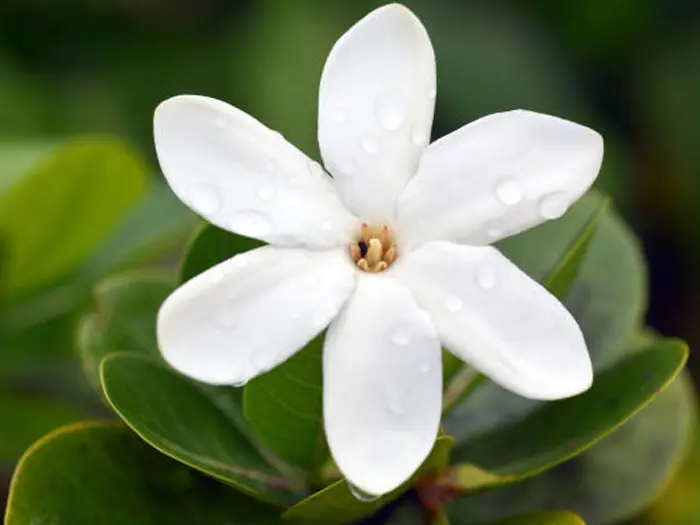
Monoï de Tahiti is made with the tiaré flower, Gardenia taitensis, a species of gardenia in the Rubiaceae family. It is known for its highly fragrant white flowers. Traditionally worn behind the ear, the tiaré holds strong symbolic meaning in Polynesian culture that extends far beyond its role in monoi production. A separate article explores the history and symbolism of the tiaré flower in greater detail.
Explore monoi products
Today, Monoï de Tahiti can be found as an ingredient in several types of body and hair care products, including body oils, dry oils, creams, balms, and hair treatments. Fragrances inspired by tiaré, Tahitian vanilla, or frangipani also extend this Polynesian scent profile, although they do not necessarily fall under the Appellation of Origin. Each type of product serves a different purpose and deserves specific guidance based on your skin, hair, and personal preferences. Our guide to choosing monoi oil explains how to select the right product for each use.
In the meantime, explore our Polynesian cosmetics, featuring monoi oils and other products selected from Polynesian brands and creators.
Official sources
- Decree No. 92-340 of April 1, 1992, concerning the Appellation of Origin “Monoï de Tahiti”, Légifrance, official French legal text.
- Decree No. 92-340 of April 1, 1992, unofficial English translation published by GIE Monoï de Tahiti.
- Appellation of Origin, GIE Monoï de Tahiti.
- Sacred Oil, GIE Monoï de Tahiti.
- History of Monoï de Tahiti, GIE Monoï de Tahiti.